top of page

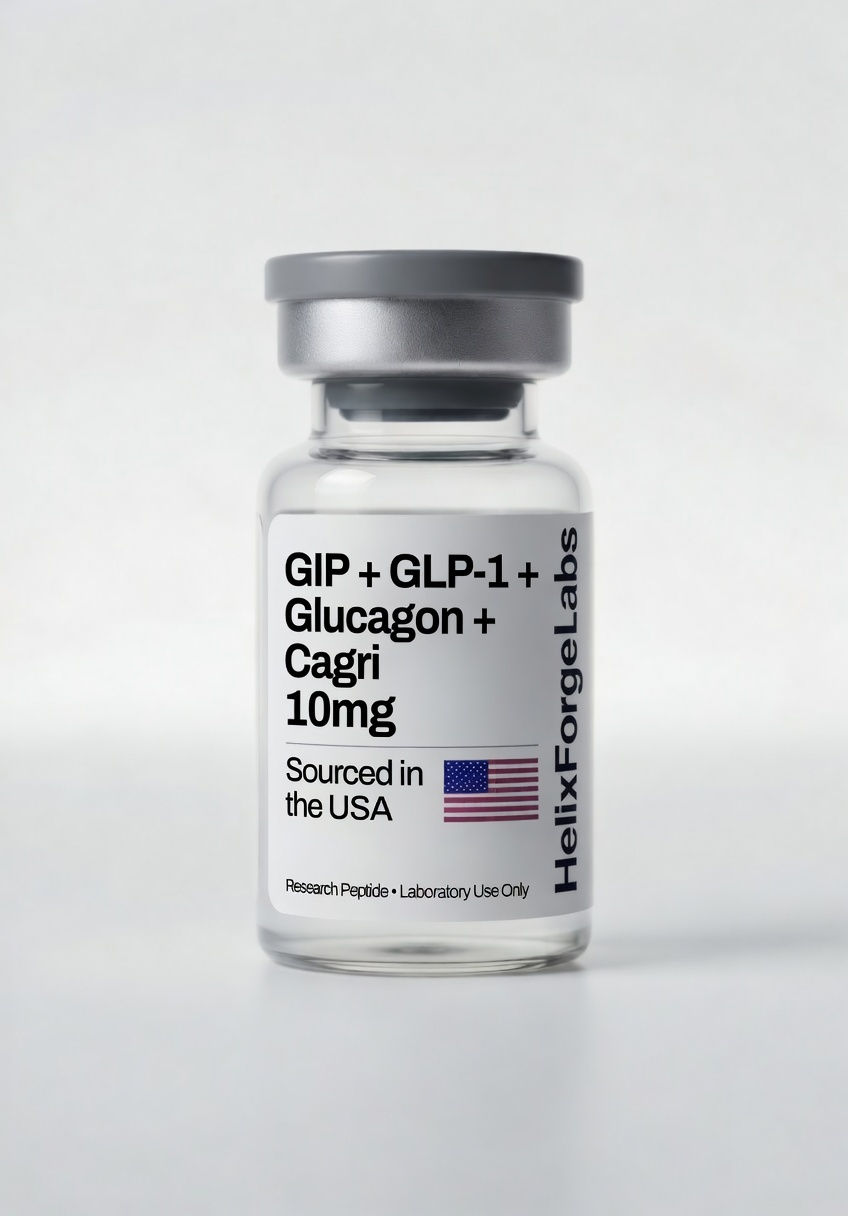
GLP-3 + Cagri

$360.00Price
Quantity
5mg
10mg
Purity Grade
Quantity

Typical Dosing Protocols (Research/Compounded Use Only) – Retatrutide + Cagrilintide (Stack)

  • Common protocol:

    • Retatrutide: Start at 1–2 mg subcutaneously once weekly, titrate every 4 weeks up to 8–12 mg weekly.

    • Cagrilintide: Start at 0.6 mg subcutaneously once weekly, titrate every 2–4 weeks up to 2.4–4.5 mgweekly.

    • Both peptides are typically injected on the same day each week (e.g., Monday morning).

  • Other reported ranges:

    • Retatrutide: 4–12 mg weekly (most common maintenance 8–12 mg)

    • Cagrilintide: 2.4–4.5 mg weekly

    • Many users combine 8 mg Retatrutide + 2.4 mg Cagrilintide or 12 mg Retatrutide + 4.5 mg Cagrilintidefor aggressive fat loss.

  • Reconstitution example:

    • Retatrutide (10–20 mg vial): Add 2 mL bacteriostatic water.

    • Cagrilintide (5–10 mg vial): Add 2 mL bacteriostatic water.

    • Draw both into the same insulin syringe for a single weekly injection.

  • Administration: Subcutaneous injection (abdomen, thigh, or upper arm). Slow titration is strongly recommended to minimize GI side effects.

Dosing is highly individualized based on goals, tolerance, and response—consult a qualified healthcare provider experienced with incretin therapies for personalized guidance. This is for informational purposes only.

  • Key Potential Benefits of the Combination

    1. Potent Weight Loss (Potentially the Strongest Yet)

      • Retatrutide monotherapy (Phase 2/3 data): Up to 24%+ body weight reduction at 48 weeks (highest doses), with continued loss and no clear plateau in many participants. This rivals or exceeds bariatric surgery in some studies.

      • Cagrilintide alone: ~10–12% weight loss.

      • When Cagrilintide is added to a GLP-1 agonist (as in CagriSema trials): Average 20–23% weight loss over 68 weeks, outperforming either agent alone.

      • Theoretical stack advantage: Adding amylin agonism (Cagrilintide) to Retatrutide’s triple action could target four complementary pathways (GLP-1, GIP, Glucagon, + Amylin), potentially driving even greater appetite suppression, energy expenditure, and fat loss.

    2. Enhanced Satiety & Appetite Control

      • Cagrilintide acts on amylin receptors in the brain to promote profound feelings of fullness and reduce food intake.

      • Retatrutide already provides strong GLP-1/GIP-driven satiety plus glucagon effects on energy use.

      • Together: Multi-pathway reinforcement of hunger signals, which may help with cravings and adherence.

    3. Improved Metabolic Health & Glycemic Control

      • Significant reductions in HbA1c (up to ~2% with Retatrutide or similar dual combos).

      • Better insulin sensitivity, reduced liver fat, and improvements in lipids/blood pressure.

      • Potential benefits for prediabetes reversal and Type 2 diabetes management.

    4. Additional Cardiometabolic & Body Composition Benefits

      • Reductions in waist circumference, systolic blood pressure, and inflammatory markers.

      • Glucagon component in Retatrutide may support increased energy expenditure and fat oxidation (while the stack helps preserve lean mass better than calorie restriction alone).

    5. Possible Synergistic Advantages Over Monotherapy

      • Broader coverage of hunger/satiety pathways → potentially less compensatory hunger or plateaus.

      • Complementary effects on gastric emptying, energy metabolism, and tissue-level changes.

bottom of page